Inclusive Tourism in Greece – Challenges and Opportunities
Greece is at an important turning point for inclusive tourism. After years of mostly local initiatives, the last two–three years have seen clearer policy signals, pilot projects and training activity that position accessibility and inclusion as strategic priorities for the sector. National bodies and NGOs are increasingly active: training programmes and workshops for destination managers and frontline staff have been launched, while academic and regional pilots (for example digital platforms mapping accessibility in Pieria) are testing practical tools to inform visitors and businesses. These efforts reflect a wider European momentum around accessible tourism and capacity-building.
Digitalisation is the single biggest opportunity for making Greek tourism more inclusive. Well-designed digital platforms, accessible websites and enriched content (detailed accessibility information, photos and videos, and booking filters) can dramatically lower uncertainty for older travellers, people with disabilities and families with specific needs and therefore expand the market for businesses that provide clear, reliable information. Digital upskilling of staff (from marketing teams to front-desk personnel) multiplies that effect: trained employees can collect and publish accessibility data, design inclusive offers and improve guest experience. Research also emphasises the sizeable economic opportunity: accessible beaches, transport and attractions unlock new demand and longer seasons if promoted responsibly.
However, important challenges remain. Physical infrastructure is still an obstacle and uneven: many islands and secondary destinations still lack barrier-free transport, ramps, accessible toilets and consistent wayfinding. Digital tools can describe but not immediately fix these gaps. Seasonal pressure on services concentrates capacity problems into a few months, posing a practical challenge on inclusive services provision. At the governance level, tourism growth pressures (short-term rentals, overtourism hotspots) create trade-offs between access, conservation and local quality of life, complicating efforts to mainstream inclusion across policy and planning. Finally, while training opportunities exist, the particularities of the tourism workforce (seasonal, working on islands away from home among others) result in the increased need of tailored trainings so that accessibility becomes routine rather than specialised.
For Greece to turn opportunity into practice the priorities are straightforward: scale up digital accessibility tools and mandatory accessibility information in booking channels; expand targeted training for tourism professionals; invest incrementally in infrastructure at priority sites; and fold inclusion into destination planning and regulation. The combined approach of digital tech & trainings & targeted infrastructure will make travel in Greece more welcoming to everyone while opening new, sustainable markets for local businesses and destinations.
References
EXPERT REPORT: Sustainable Tourism in Greece (2023)
https://insete.gr/wp-content/uploads/2023/11/23-11_Sustainable_Tourism_in_Greece_EN.pdf
Empowering Tourism Accessibility: A Digital Revolution in Pieria, Greece (2024)
https://www.mdpi.com/2076-3417/14/23/11136
Reuters – Greece must reform to protect tourism (2024)
https://www.reuters.com/world/europe/greece-must-reform-protect-tourism-ombudsman-says-2024-06-13/
Accessible tourism in Greece: What is the current status? (2019)
https://www.academia.edu/65321060/Accessible_tourism_in_Greece_What_is_the_current_status
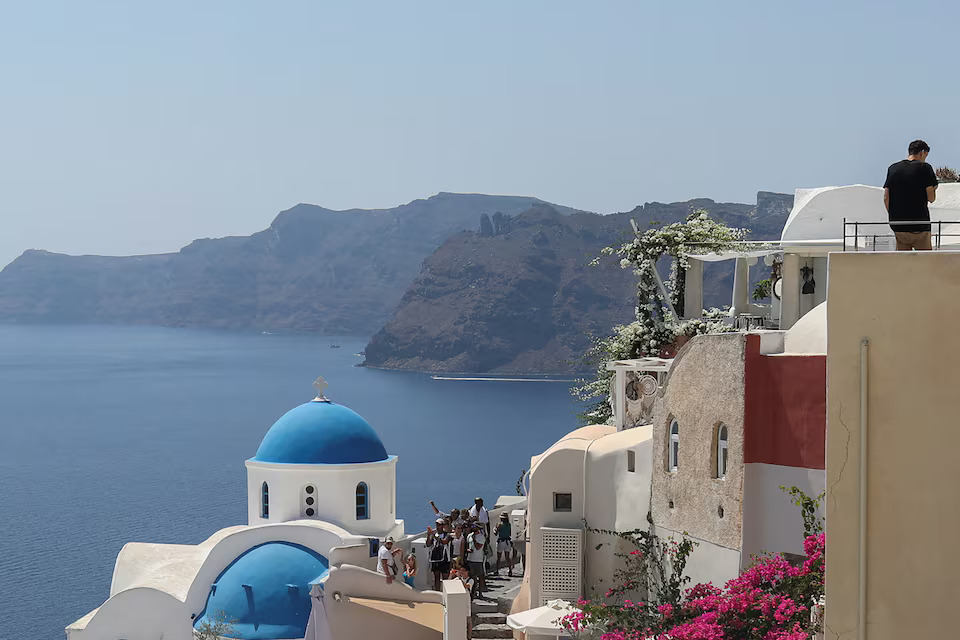
Image: Tourists visit Oia, on the island of Santorini, Greece, August 31, 2022. REUTERS/Louiza Vradi/File Photo