SMART INCLUSION First Workshop – Greece
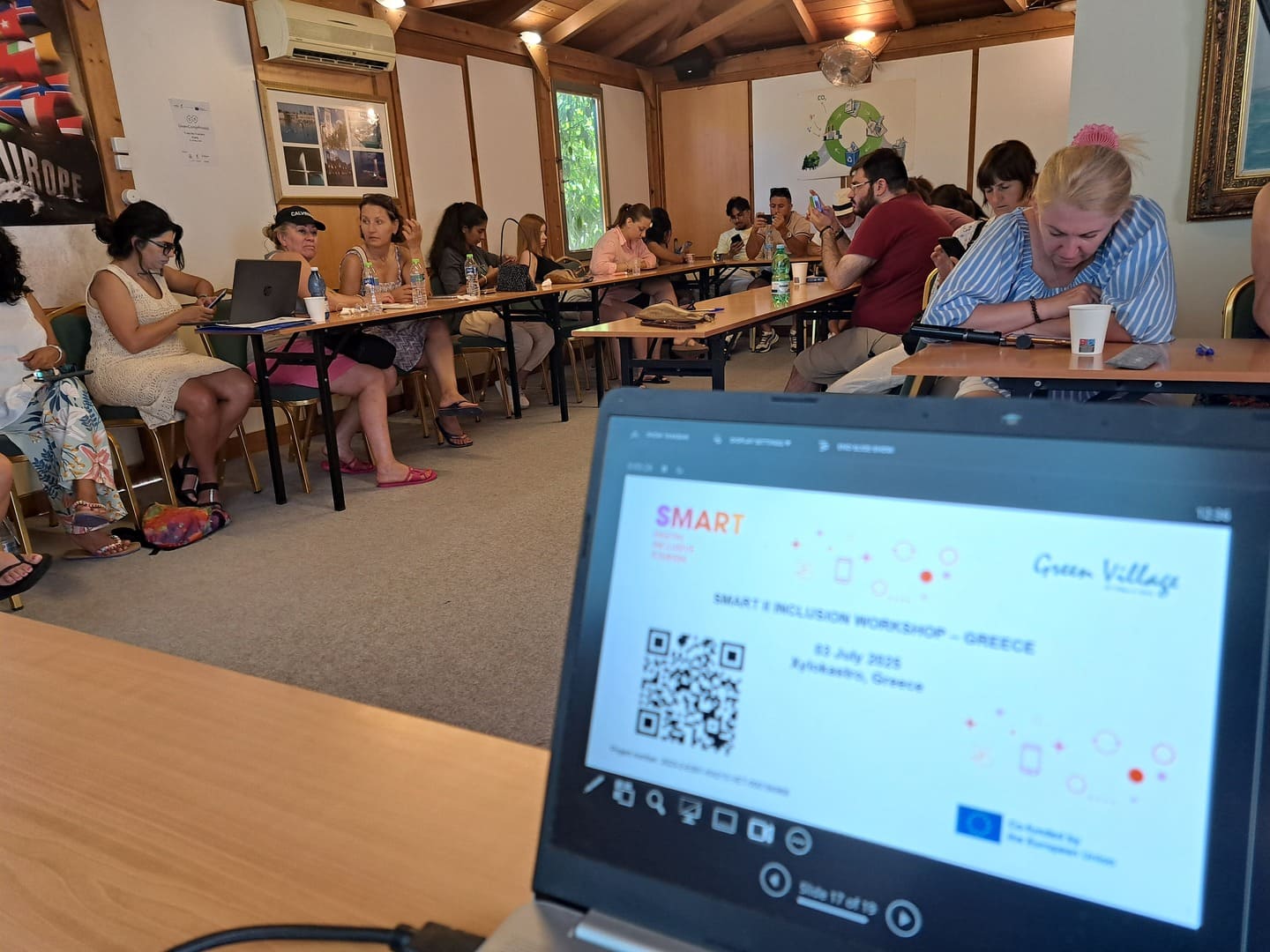
The first Greek National Workshop of the SMART INCLUSION project took place on Friday, 3 July 2025, at the Green Village Hotel in Xylokastro. Designed as an interactive learning and networking event, the workshop brought together 30 participants from Greece, Italy, and Albania, including VET learners, adult educators, tourism trainers, and hospitality staff. As one of the key milestones of the project, this workshop enabled the practical application of the SMART INCLUSION tools and fostered a transnational dialogue on digitalisation, accessibility, and inclusive tourism.
The workshop opened with a comprehensive introduction to the SMART INCLUSION project. Over the first hour, the trainer presented the initiative’s scope, aims, and expected impact within the broader Erasmus+ context. Participants were introduced to two core project deliverables, the Best Practices collection and the SMART INCLUSION Guide, and explored the project’s online resources and communication channels. This session helped establish a shared understanding of how digitalisation can support greater inclusiveness in tourism education and professional practice.
The second part of the workshop focused specifically on the Greek national context, examining the challenges and opportunities related to digital accessibility in tourism businesses and destinations. Over the course of 90 minutes, educators and learners engaged in a lively exchange on topics such as digital barriers faced by travellers with disabilities, the uneven implementation of accessible infrastructure, and promising examples of digital tools used by hotels and cultural sites. Real cases from the hospitality industry enriched the discussion, enabling participants to reflect on how inclusive digital solutions can be integrated into everyday tourism operations.
The final session adopted the fishbowl discussion method, encouraging participants to reflect collectively on the usefulness of the SMART INCLUSION materials. The dialogue revealed a strong sense of motivation among future and current tourism professionals, many of whom expressed newfound awareness of how inclusion and accessibility intersect with digital transformation in the sector. Participants noted that while their formal studies often overlook digital skills and inclusive design, the workshop helped bridge this gap by offering practical frameworks and actionable insights.
Evaluation results, gathered through an online questionnaire and the open discussion, were highly positive. Participants recognised the urgent need for new skills in digitalisation, sustainability, and inclusiveness—competencies increasingly in demand in the modern tourism workforce. Several attendees also highlighted the importance of reducing the divide between Higher Education (HE) and Vocational Education and Training (VET), as well as aligning learning pathways with real tourism practice in Greece.
One adult trainer summarised the workshop’s added value:
“The SMART INCLUSION workshop was a very interesting opportunity to understand the importance of digitalisation and accessibility in tourism. The materials were extremely useful and the organisation was excellent.”
Overall, the first national workshop succeeded in raising awareness, enhancing digital readiness, and equipping participants with practical tools to foster a more inclusive tourism sector. The event strengthened the sense of shared responsibility among educators, learners, and practitioners laying valuable groundwork for future collaboration within the SMART INCLUSION community.