Digital Inclusive Tourism in Practice: case studies from Greece
Greece’s tourism sector is increasingly embracing digital tools to make travel more inclusive. Below are five practical initiatives that include a mix of private start-ups, corporate tech, civic platforms and municipal pilots. These show in practice how digitalisation can remove barriers for people with disabilities, older travellers and those with reduced mobility. Each example highlights different approaches, lessons learned and potential for scaling across destinations.
1. AccessLab - mapping and certifying accessibility
AccessLab (AccessLab IT Services) is an Athens based company specialising in accessibility mapping, digital audits and certification for public spaces, attractions and tourism businesses. The team combines on-site surveys with apps and web platforms that publish reliable accessibility information from step-free routes to toilet facilities, enabling travellers to make confident choices. AccessLab’s model is valuable because it translates physical audits into machine-readable, shareable data that hotels, booking platforms and municipal planners can use. This approach reduces uncertainty for visitors and creates incentives for businesses to invest in concrete improvements.
2. Greece No Limits - inclusive accommodation listings
Greece No Limits is a national web service focused on accessible accommodation and experiences. The platform lists rooms, studios and apartments annotated with accessibility features (e.g., roll-in showers, wide doors, proximity to medical services) and allows direct booking. By standardising how accessibility features are described, Greece No Limits helps match traveller needs with appropriate offers. It is a simple but powerful intervention that increases demand visibility for inclusive providers and reduces the transactional friction that often deters travellers with access needs.
3. COSMOTE CHRONOS - immersive digital access to heritage
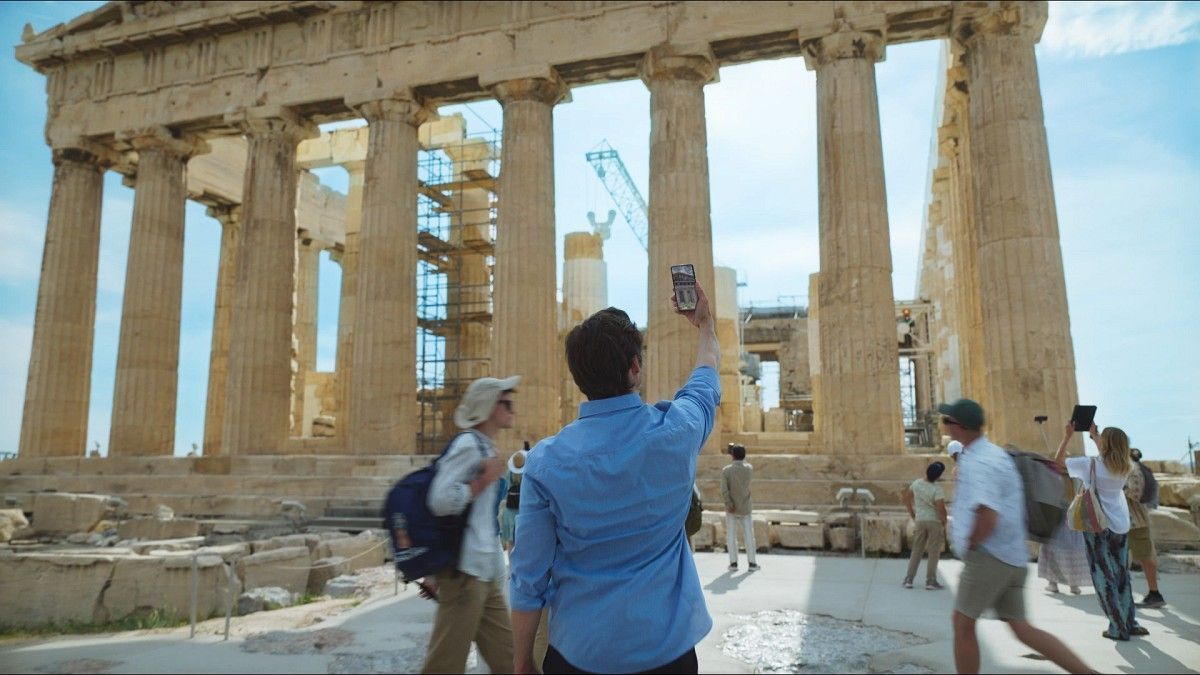
COSMOTE CHRONOS is an augmented reality (AR) and AI-driven app developed in partnership with COSMOTE and Greece’s cultural heritage bodies to recreate ancient monuments, notably the Acropolis, in their original form. Beyond the wow factor, Chronos expands accessibility by offering virtual routes, narrated content and visual reconstructions that are especially valuable for visitors who cannot access steep or uneven sites. AR/VR applications like Chronos show how cultural inclusion can be advanced through immersive content that complements, and sometimes substitutes for, physical access.
4. Orbito Travel - end-to-end booking for reduced mobility
Orbito Travel is a Greek startup that provides an end-to-end online travel service tailored to travellers with reduced mobility. The platform aggregates accessible accommodation, transfers, activities and support services into packages bookable in a single transaction. By handling the complexity of matching mobility needs with service providers, Orbito reduces the planning burden on travellers and builds trust through verified listings and specialised customer support. The startup’s traction demonstrates clear market demand and highlights the business case for specialised, accessible travel tech.
5. Accessible Athens (This is Athens & Me Alla Matia) - city itineraries and participatory design
A municipal pilot in Athens coordinated through the official city guide “This Is Athens” and the social enterprise Me Alla Matia (run by people with disabilities) has produced a set of accessible tourist itineraries and digital route maps for visitors with mobility and visual impairments. The project combined user-led fieldwork with online publication of routes and practical guidance for visitors and operators. This civic example illustrates the value of participatory design: accessibility improves fastest when people with lived experience are central to mapping, testing and publishing routes.
Cross-case analysis: lessons learnt and future challenges
These five cases show recurring success factors. First, data + visibility matter: platforms that publish standardised, verified accessibility data reduce uncertainty and stimulate demand. Second, specialised marketplaces (like Orbito) that bundle services make trips feasible for those with complex needs. Third, immersive digital experiences (AR/VR) can meaningfully broaden access to cultural heritage when physical access is constrained. Fourth, participation by disabled people in design and testing ensures solutions address real needs rather than assumptions.
However, digital tools cannot replace physical accessibility. Many Greek islands and secondary destinations still lack ramps, accessible transport or consistent wayfinding. These issues require infrastructure investment alongside digital information. Seasonality and fragmented service delivery also limit scalability: digital offers must be coupled with trained staff, accessible transport slots and coordination among local providers. Finally, sustainability of platforms depends on viable business or funding models; certification, municipal procurement or tourism board partnerships can help ensure longevity.
Greece is making important progress: from practical listing platforms to immersive heritage apps and specialist Travel Agencies, the country now has a toolbox for digital inclusive tourism. The next step is combining those tools with investment, governance and upskilling of tourism workforce as well as tourism business owners to ensure inclusive tourism services provision for every traveler.
References
Accesslab – https://accesslab.gr/en/
Greece No Limits – https://greecenolimits.gr/
Cosmote Chronos – https://www.cosmote.gr/static/otegroup/en/article/cosmote_chronos
Orbito Travel – https://orbito.travel/
Accesible Athens – https://accessibleroutes.thisisathens.org/en